Bedding · Materials & construction
Why Coyuchi’s Honeycomb Weave Works for Layered Bedding
A blanket’s comfort depends on more than its fiber. The way yarns cross and leave space in a fabric can shape its texture, weight, airflow, and place in a layered bed. Honeycomb weave is one example: a raised, geometric structure that can feel substantial while remaining open enough for air to circulate.
Published November 22, 2026
A texture with a practical purpose
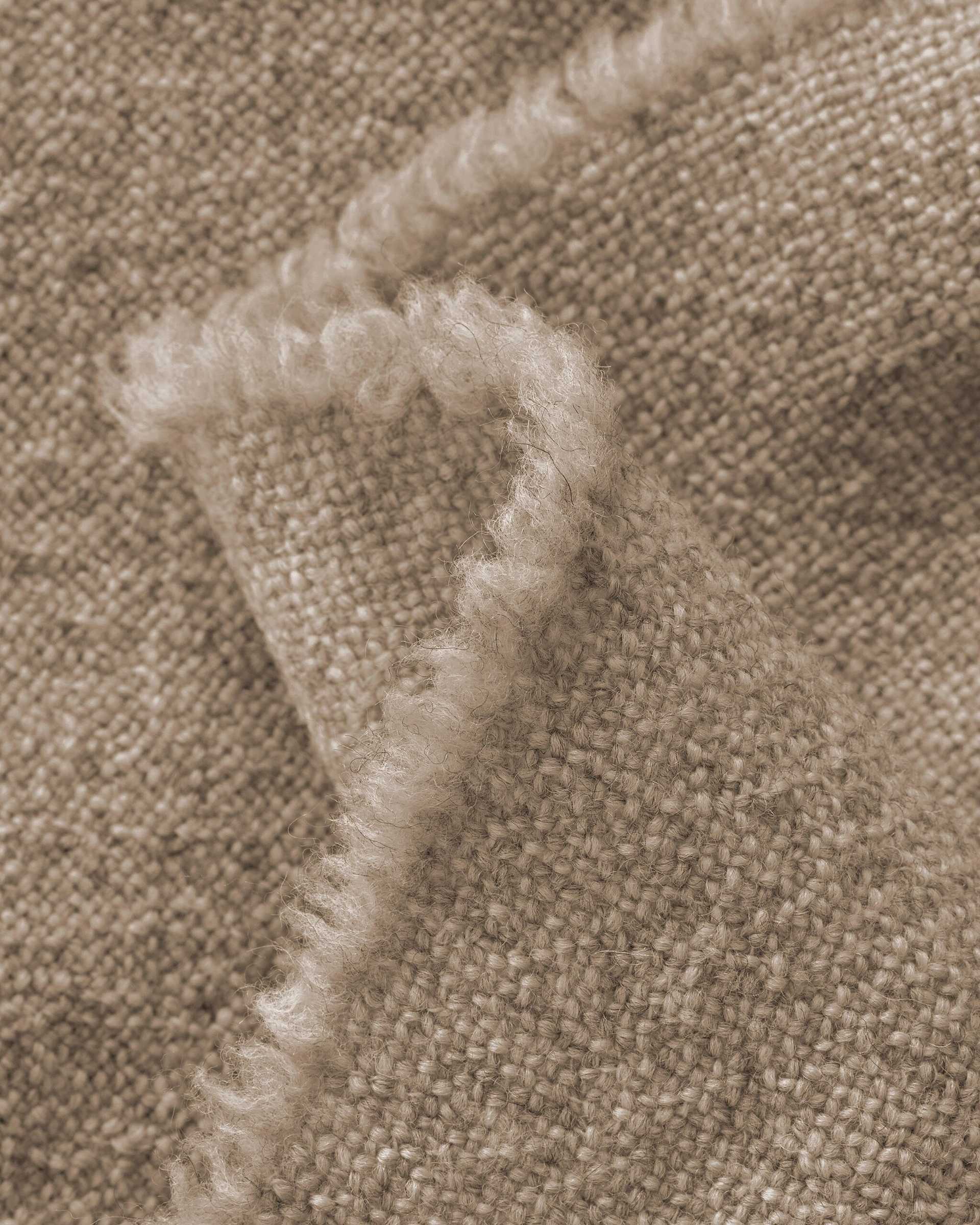
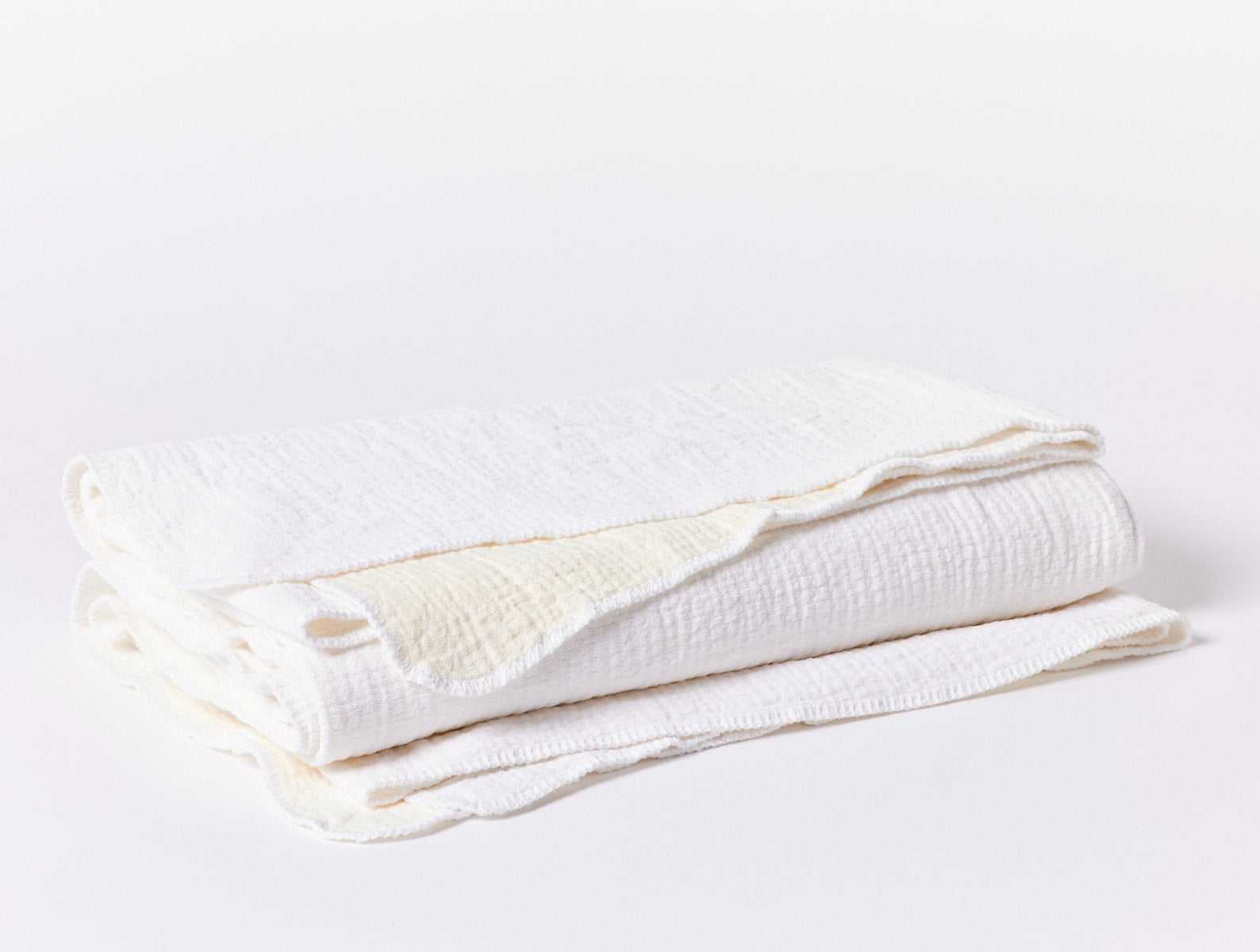
Look closely at a honeycomb blanket and its surface resembles a field of tiny cells: ridges rise, shallow wells recede, and the pattern repeats across the cloth. It is not merely decoration. The weave’s relief gives the fabric dimension and influences how it sits against the body, how it drapes over a duvet, and how it feels when folded at the foot of a bed.
Honeycomb is often grouped with waffle weave because both create a textured, three-dimensional surface. The terms can describe related visual effects, but they are not a guarantee of identical construction. Weave patterns, yarns, finishing, and fabric weight vary from one textile to another. A blanket’s label and detailed specifications therefore matter more than a pattern name alone.
For layered bedding, the appeal is a combination of structure and flexibility. A textured blanket can add a noticeable layer without necessarily feeling like a dense, flat sheet of cloth. The raised surface may also help keep parts of the fabric from lying continuously against another layer. How much that affects warmth and airflow depends on the blanket’s actual construction, fiber, and weight—not texture by itself.
How a honeycomb weave is formed
Woven fabric is made by interlacing two sets of yarns: lengthwise warp yarns and crosswise weft yarns. In a honeycomb structure, the pattern changes how those yarns pass over and under one another. Some sections pull inward while others stand higher, producing a small-scale relief across the cloth. The result can look like a grid of cells or a soft, geometric lattice.
This raised-and-recessed form gives the blanket a different hand from a smooth, plain weave. The ridges may feel more pronounced under the palm; the wells create visual shadow and texture. When the cloth is folded, the surface catches light unevenly. On a bed, that dimension can make a simple cotton layer look considered without relying on a print or elaborate trim.
The pattern also affects how a blanket behaves. A textured fabric may feel springier or more substantial than a smooth cloth of similar fiber content. Its drape can be more relaxed, and its surface can make it easier to distinguish from the layers beneath. These are tendencies rather than rules: yarn thickness, density, finishing, and overall dimensions all contribute to the finished feel.
Honeycomb and waffle are useful descriptive terms, not substitutes for a specification sheet. Two blankets with similar-looking cells can differ in thickness, mass, softness, and resilience. When comparing Coyuchi’s woven bedding or any other brand’s offerings, look for the stated fiber content, construction details, weight if provided, size, and care instructions. Those facts help translate a texture name into practical expectations.
Why texture can work well in layers
A bed is a small climate system. The sleeper, room temperature, mattress, sheets, blankets, and duvet all influence how warm or cool it feels. Layering makes it possible to adjust coverage without replacing the entire bed setup. A honeycomb blanket can serve as an intermediate layer: lighter than a thick comforter in some constructions, but more textured and visually present than a flat top sheet.
Rather than assuming a particular weave will keep everyone at a comfortable temperature, consider how you use bedding. If you often feel warm, an airy-feeling blanket may be more comfortable than a heavy, tightly packed layer, but the weave alone cannot promise a cooling effect. Fiber type, fabric density, room conditions, sleepwear, and personal preference all play a role. If you tend to feel cold, the same blanket may be useful beneath a duvet or over a sheet, with warmth adjusted by adding or removing layers.
In a flexible bedding arrangement, each layer has a job. Sheets provide the first contact with the skin. A blanket adds adjustable coverage and texture. A duvet or comforter supplies greater insulation when needed. In mild weather, a breathable blanket may be enough on its own for some sleepers. In colder conditions, it can sit beneath a warmer layer, adding a modest degree of coverage without requiring a permanently heavy bed.
Honeycomb’s structure can also help with the visual organization of layers. A blanket folded across the foot of the bed introduces a contrasting surface against smooth sheets or a duvet cover. The geometry is quiet rather than busy, so it can work with solid colors and many room styles. The same texture may feel at home in a carefully made guest bed or casually draped over a reading chair.
For a related organic-cotton option with a different construction, see the Coyuchi Cozy Cotton Organic Blanket. It is made from organic cotton chenille yarn and has a washed, gently puckered finish. It is not a honeycomb-weave blanket, but it illustrates why it is useful to compare fabric construction as well as fiber when choosing a layer.
Fiber, weight, and feel
Weave describes how yarns are arranged; fiber describes what those yarns are made from. Both matter. Organic cotton is a natural plant fiber commonly used for blankets because it can be woven into fabrics with varied textures and weights. The specific feel of a cotton blanket still depends on yarn quality, thickness, construction, and finishing. “Cotton” alone does not tell you whether a fabric will feel crisp, plush, light, or dense.
When organic credentials are important, check what the product information says about the material and any certification. A certification can provide evidence that specified requirements have been met, but the scope of each program is different. Read the claim carefully: a certification may apply to a fiber, a finished textile, a production facility, or a broader supply chain. Do not treat a general phrase such as “natural” or “eco-friendly” as equivalent to a verified standard.
Weight can offer another useful point of comparison. Some manufacturers state fabric weight in grams per square meter (gsm), while others provide no figure. A heavier fabric may feel more substantial, but weight is not a direct measure of warmth or quality. The way a fabric is woven, the material’s characteristics, and how the blanket is finished all contribute. If weight is not listed, dimensions and construction notes can still help you make a more informed comparison.
For bedding, size is as practical as fiber. A blanket should cover the area where you want warmth and fit the way you intend to layer it. A throw is designed for a different purpose than a full bed blanket; a generously sized layer may drape farther over the sides, while a closer fit may be easier to manage. Compare the stated dimensions with your mattress and existing bedding rather than relying only on labels such as “queen” or “king.”
Reading the label beyond the weave name
A clear product description should help answer several questions. What fibers make up the blanket? Is the material described as organic, and is a certification named? Is the fabric woven, knitted, brushed, prewashed, or finished in another way? What are the dimensions? How should it be laundered? These details are particularly useful when comparing honeycomb weave bedding with other textured blankets.
- Fiber content: Look for percentages where a blanket combines multiple materials. A blend can feel different from a single-fiber textile and may have distinct care needs.
- Construction: Check whether the description specifies honeycomb, waffle, jacquard, matelassé, or another structure. Similar-looking textures do not always behave alike.
- Weight and dimensions: Use measurements to judge coverage and layering, and use fabric weight if it is provided as one comparison point—not as a complete measure of performance.
- Certification details: Identify the named standard and the claim it supports. For organic textiles, verify the precise wording rather than inferring certification from color, texture, or marketing language.
- Care instructions: Confirm whether the blanket is machine washable, what water temperature is recommended, and whether it should be dried flat, line-dried, or tumble-dried.
- Finishing and edges: Trim, hems, pre-shrinking, and other finishes can affect durability, appearance, and how a blanket holds its shape.
These checks are more reliable than choosing solely by a product photograph or a promise that a fabric is suitable for every season. Seasonal comfort varies from person to person and from home to home. A blanket that works as a single layer in a heated room may be best used under a duvet in a cooler bedroom.
Care shapes the life of a textured blanket
Raised surfaces need sensible care. The most important instruction is the one provided for the specific blanket: different fibers and finishes tolerate different washing and drying conditions. Follow the manufacturer’s label rather than assuming that all cotton bedding can be washed in the same way. Care instructions are part of a textile’s design, and a blanket that suits your laundering routine is more likely to remain in regular use.
If machine washing is permitted, avoid overloading the machine. Bedding needs room to move so detergent and water can circulate. Use the recommended cycle and temperature, and select detergent appropriate for the material. High heat and aggressive washing can put unnecessary stress on fibers and seams; if the care label recommends low-temperature drying or prompt removal, follow that guidance.
Texture may change with washing. Some fabrics soften, settle, or become more relaxed with use, while others can shrink or lose definition if exposed to unsuitable heat. Pre-shrinking, when specified, is one feature to note, but it does not make every later care choice risk-free. Gently airing a blanket between washes can help extend the time between laundering, provided it is clean and fully dry before being stored.
Inspect edges and seams occasionally, particularly if the blanket is used every day or moved between rooms. A loose thread can be secured carefully before it catches further. Fold or store the blanket in a clean, dry place, away from prolonged dampness and direct sunlight. Thoughtful care preserves not only appearance but also the practical value of a textile used night after night.
Choosing a blanket for your climate and routine
Start with the conditions in your bedroom. Consider whether the room stays cool at night, whether heating changes through the seasons, and whether you prefer a single cover or several adjustable layers. Then consider who will use the blanket and how often it will be washed. A layer for a guest room, a child’s bed, and a frequently used primary bed may need different dimensions, durability, and care characteristics.
For warm weather, look for a fabric that feels comfortable in direct contact with the skin and is not so large or weighty that it becomes cumbersome. A honeycomb or waffle-style surface may appeal if you want texture with an open, dimensional look. Still, the precise fiber and density matter; do not infer breathability from the pattern name alone.
For cooler weather, think in combinations. A textured blanket can contribute an adaptable layer beneath a duvet, or it may be placed over the top for extra coverage. A bed built from separate layers is easier to adjust than one dependent on a single thick cover. If you share a bed with someone who prefers a different level of warmth, separate lightweight layers on each side can sometimes be more practical than one fixed-weight option.
For a home where bedding is washed often, clear machine-care instructions can be especially important. If a blanket requires special handling, decide whether that fits your routine before buying. A beautiful textile that is difficult to maintain may be less useful than a simpler layer that you can care for consistently.
A considered way to compare Coyuchi’s woven bedding
The central question is not simply whether honeycomb is “better” than a smooth weave. It is whether a particular blanket’s materials and construction fit the job you want it to do. Coyuchi’s woven bedding can be assessed with the same grounded approach used for any textile: begin with the stated fiber, verify organic and certification claims, compare dimensions and weight where available, and read the care instructions before deciding.
Then consider the tactile and visual role. Do you want a raised surface that adds texture to a plain bed? A layer that can be folded away when nights warm up? A fabric substantial enough to stand on its own, or one intended to sit between sheets and a duvet? Product descriptions that provide construction and measurements are more useful than broad claims about universal comfort.
Descriptions of honeycomb blankets may emphasize qualities such as a weighty hand, a textured jacquard surface, pre-shrinking, or a contrasting trim. These are specific features to weigh against your needs, not guarantees that every person will experience the same warmth or softness. The most reliable choice is the one whose documented characteristics suit your climate, preferences, and care habits.
The quiet value of a useful layer
Good bedding does not have to be complicated. A well-chosen blanket can offer adjustable coverage, a tactile change from smooth sheets, and a way to make a bed feel finished without adding a heavy comforter. Honeycomb weave earns its place through the interplay of structure and softness: a repeating pattern that gives fabric shape while remaining adaptable to different layering arrangements.
The weave is only one part of the decision. Fiber, weight, size, certification, finishing, and care each contribute to how a blanket performs over time. Read those details together, and the raised geometry begins to make practical sense—not as a promise of perfect sleep, but as one thoughtful option among the many ways to build a comfortable bed.
Frequently asked questions
Is honeycomb weave the same as waffle weave?
They are often used to describe similar raised, cell-like textures, but the terms do not ensure identical construction. Check the product’s specific weave description and fabric details when comparing blankets.
Does a honeycomb blanket keep you cool?
Not automatically. A raised weave may feel open and textured, but comfort depends on fiber, density, room temperature, and personal preference. Consider the full construction rather than relying on the pattern name as a cooling claim.
What should I compare when choosing organic waffle bedding?
Compare fiber content, certification wording, construction, dimensions, weight if listed, and care instructions. These details offer a more useful basis for choosing than texture or marketing language alone.
Can a honeycomb blanket be used all year?
That depends on its weight and how you layer it, as well as your room and comfort preferences. A lighter blanket may be used on its own in mild conditions and combined with warmer bedding when temperatures fall.