Introduction: Reading the fabric map
In the quiet vocabulary of textiles, labels are more than mere tags. They are disclosures—windows into the journey from fiber to finished fabric. For anyone seeking organic blankets, the labels tell a story of origin, processing, and environmental stewardship. This guide unfolds the two most influential certifications—GOTS and OEKO-TEX—and places them alongside related standards that shape the ethics and performance of our bedding.
The modern consumer has unprecedented access to information, yet the abundance of acronyms can feel like a labyrinth. By understanding fiber origin, processing methods, chemical restrictions, and lifecycle implications, you can separate hype from honesty. The goal is not to condemn or complicate but to illuminate the path to a healthier sleep environment—one that honors people, places, and the planet.
What GOTS actually certifies
The Global Organic Textile Standard (GOTS) is widely regarded as the premier certification for organic textiles. Its reach is comprehensive, spanning from fiber production to fabric processing and labeling. Key facets include:
- Fiber origin: The fiber must be organic, grown without synthetic pesticides or fertilizers in certified growing regions.
- Processing: Finished textiles undergo pre-wreatment, dyeing, finishing, and packaging under strict ecological and social criteria.
- Chemicals: GOTS bans a long list of toxic and restricted substances, including many pesticides, heavy metals, and toxic solvents.
- Social criteria: Manufacturing facilities must meet fair labor standards, safe working conditions, and ethical practices.
- Labeling: GOTS requires clear disclosure of fiber content and certification details on product labels.
For blankets and sheets, GOTS certification signals that the product’s fiber content is genuinely organic and processed with minimized environmental impact. It is particularly meaningful for parents shopping for babies and households prioritizing low-chemical sleep environments.
Understanding OEKO-TEX
OEKO-TEX Standard 100 is another cornerstone of textile safety. Unlike GOTS, which centers on organic agriculture and processing, OEKO-TEX focuses more broadly on chemical safety in finished textiles. Its standard ensures that the product has been tested for harmful substances and meets human-ecological requirements.
- Scope: Applies to all processing stages, from raw materials to finished textile products.
- Testing: Includes a suite of substances known to be hazardous to human health, with limits that are often stricter than conventional laws.
- Labeling: OEKO-TEX Standard 100 certification appears as a label indicating safety of the final product for human use.
While OEKO-TEX does not guarantee that a textile is organic in the agricultural sense, it provides an important safety net: a guarantee that the product has undergone rigorous testing for chemical content. For households sensitive to chemicals, OEKO-TEX is a reliable baseline.
Related certifications and what they cover
Beyond GOTS and OEKO-TEX, several additional standards shape the landscape of sustainable textiles. Some buyers reference these to interpret labels with nuance:
- Global Recycled Standard (GRS): Verifies recycled content and responsible production, appealing to shoppers who favor circular textile economies.
- Fair Trade Certified: Signals ethical labor practices and community benefits in production facilities.
- FSC (Forest Stewardship Council): Pertains to wood-based fibers like viscose or lyocell, ensuring responsible forest management in sourcing.
- OKO-TEX 100 and OKO-TEX Standard 100 Plus: Regional variants that extend testing criteria for specific markets.
Each standard contributes a thread to the larger fabric of sustainability. While a single certification can be meaningful, a combination of organic farming, safe processing, and ethical labor practices provides a more robust guarantee of responsibility.
Interpreting common bedding materials through certification labels
When shopping for organic blankets, you’ll encounter various fibers—organic cotton, organic wool, blends, and sometimes silk or linen. Each fiber interacts with certifications in unique ways:
- Organic cotton blankets: Expect GOTS or similar organic certifications on the cotton fiber, with additional OEKO-TEX or GOTS processing licenses to cover dyes and finishing.
- Organic wool blankets: Look for GOTS in blended textiles where wool is part of an organic supply chain, and verify processing standards for scouring and dyeing.
- Blends: Certification complexity increases with blends. A blanket labeled as GOTS-certified must ensure the organic portion (e.g., cotton or wool) adheres to organic standards throughout the supply chain, including processing of any non-organic components.
Certification labels are most trustworthy when they are transparent about the entire supply chain and include property details such as fiber content, country of origin, and certificate numbers. Always cross-reference the certificate with the issuing body’s database when possible.
A practical label-checklist for shoppers
Use this concise checklist to evaluate a candidate blanket quickly and confidently:
- Is there a recognized organic certification on the fiber? Look for GOTS (organic), GOTS with additional third-party labels, or equivalent national standards.
- Is the processing or dyeing labeled as OEKO-TEX or similar chemical-safety certification?
- Are the certificate numbers visible on the product or packaging, with access to verification databases?
- What is the fiber content, and does the product disclose the proportion of organic material in blends?
- Are social and environmental practices acknowledged (e.g., Fair Trade, FSC for wood-based fibers)?
The goal is to read the label the way a field geologist reads a rock: surface clues, layered history, and regional provenance, all pointing toward a deeper truth about the material beneath our skin and in our sleep.
Case studies: a few textiles in focus
The following examples illustrate how certifications can appear in real products. These examples come from a curated selection of blankets and throws, highlighting how buyers encounter GOTS and OEKO-TEX in practice.
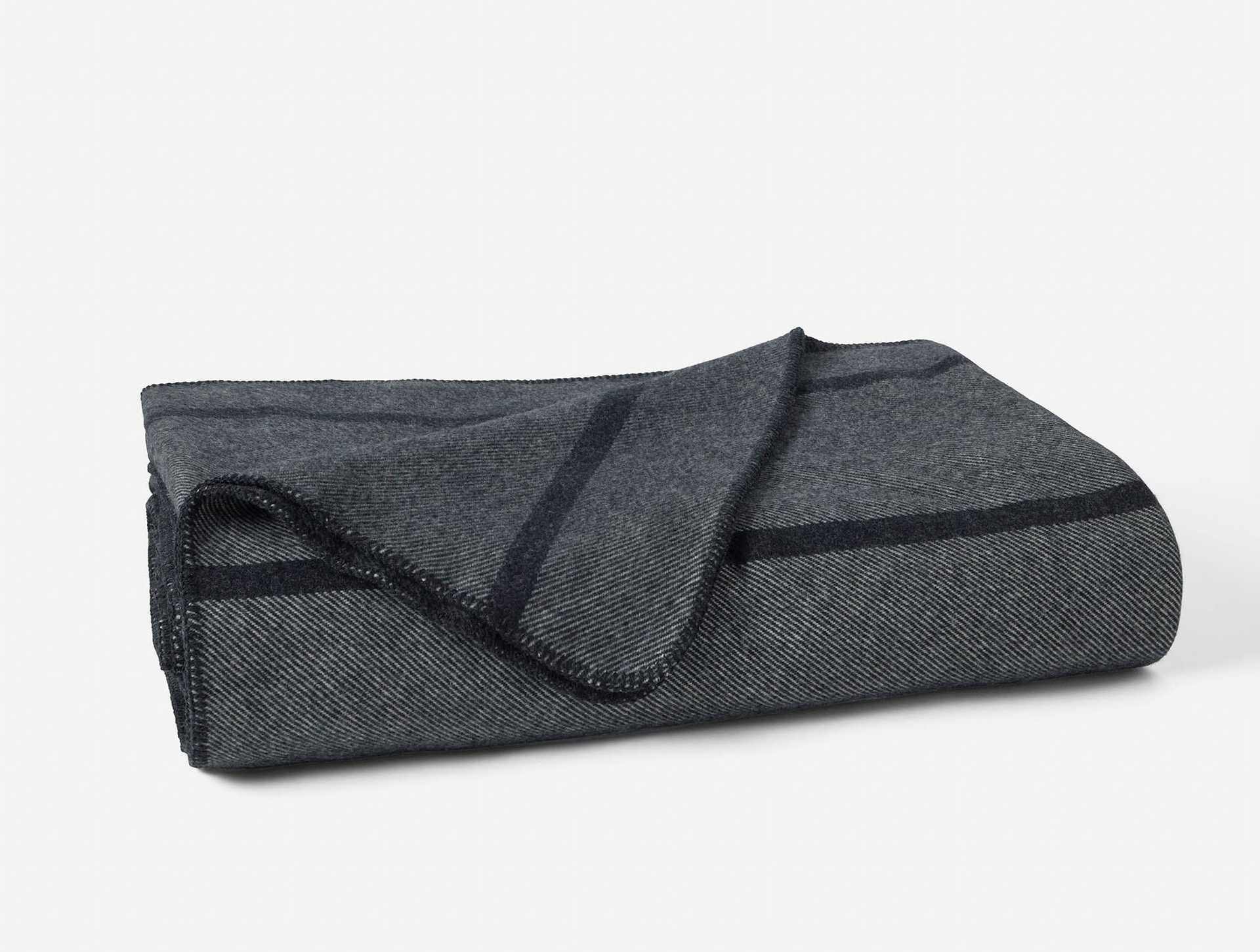
Downtown Company Cashmere-Soft Blanket and Throw
Acrylic and cotton blend, with a cashmere-soft feel; designed for year-round comfort.
While the Downtown piece emphasizes a soft, durable feel and low-impact dyes, buyers should verify whether GOTS or OEKO-TEX certifications are present on the final product or its components. The label may indicate care instructions, fiber content, and origin, but certification status should be confirmed through the manufacturer's documentation.
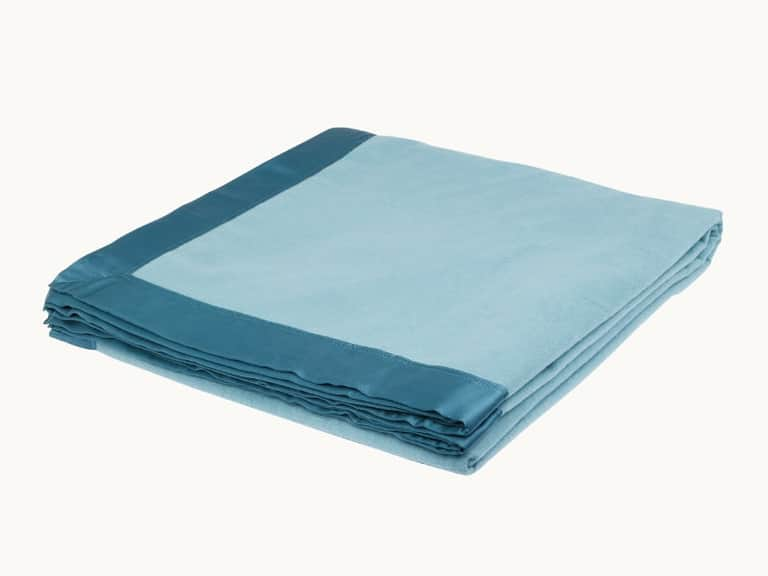
Petrol Blue Blanket (Silk Blanket with border)
100% silk with a silk border; breathable and lightweight for layering.
Silk inherently carries hypoallergenic properties and temperature regulation benefits, but certification labeling for silk can be less uniform than cotton. Look for OEKO-TEX Standard 100 or GOTS when silk is part of a broader organic system, and request documentation confirming purity and processing standards.
A broader view: the values of certification for a modern home
Certifications like GOTS and OEKO-TEX function as navigational beacons in the sea of textile choices. They translate the warmth of a blanket into a measure of responsibility: responsible farming, reduced chemical exposure, safer dyes, and fair labor practices. In homes, these labels translate into a sleeping environment that respects both skin and planet, allowing a deep, restorative rest grounded in verified standards.
As textile science advances, certifications evolve too. The dialogue between producers, retailers, and consumers grows more transparent, and the language of sustainability becomes more precise. The result is not a single magic badge but a constellation of indicators guiding informed choices without sacrificing comfort or design.
Conclusion: making informed, lasting choices
The path to organic bedding begins with reading the label—understanding GOTS, OEKO-TEX, and related standards, and recognizing their implications for fiber origin, processing, and environmental impact. The labels you encounter in stores and online tell a story about soil, water, workers, and the journey from raw fiber to the oasis of sleep. By applying a clear checklist, shoppers can choose blankets that align with values and practical needs—from infant-safe sleep surfaces to year-round comfort for adults.
In the pages that follow, we invite you to explore a curated library of guides, explained simply yet with rigor, and to consider a tapestry of textiles that embodies care, craft, and conscientious design.